A DAY IN THE LIFE OF EDWARD BRANNON,
A VICTORIAN IRONSTONE MINER
In 1890 H M I of Mines Mr W N Atkinson produced his annual report into accidents that had occurred within North Staffordshire, Cheshire and Shropshire. The report showed that 38 persons had been killed in the period Jan 1st to Nov 22nd of that year. Under the heading "Accidents" he writes. "The total number of accidents reported during the year, which on enquiry were found to be accidents coming within the Coal Mines Act, was 275. Of these, 40 were fatal accidents, causing the death of 43 persons and injuries to 6 other persons, and 235 non-fatal accidents resulting in injuries more or less serious to 240 persons. None of the accidents were of exceptional importance, and in only three cases was there more than one life lost." We would find this statement breathtaking if it were written today. In Great Britain for the year 1890 there were more persons killed in mining than British soldiers killed in the Falklands War. It is against this background the following is presented.
The following is a discussion of aspects of Edward Brannon’s life including his past, his family, his environment, and people who influenced his life are also considered.
Edward and his wife Bridget were born in Ireland, Edward c1840 Bridget c1841. They were married sometime in the 1860’s, and soon produced their first child, a boy they named him Patrick. Times were very hard, a lot of their friends were moving away, emigrating to places all over the world. They would often wonder if they should leave, they heard there was plenty of work in England. Being young and strong and were sure they would make a better life for themselves and young Patrick over the water.
We do not have the actual date when they came to England, but the 1871 census gives their address as 16, Audley St, Tunstall which at the time came under Newcastle-U-Lyme, in the Parish of Wolstanton.
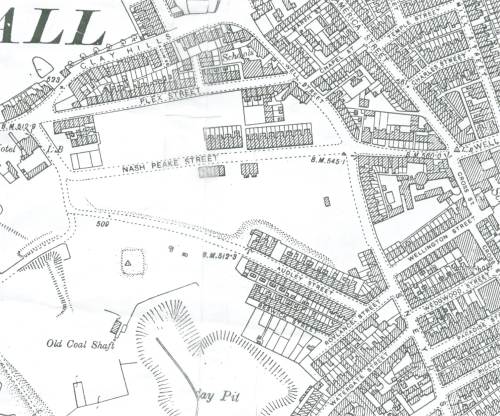 The Census also tells us, that Edward was now an Ironstone miner, and two more children had been added to the family. There was Mary Ann in 1869, and Martin in 1871, both were born in Tunstall. There was also a lodger, the unmarried sister in law 25 year old Mary Ann Donahue who was employed as a "potters" assistant. The Census for 1881 shows the family still living at Audley St, and four more children had arrived, Ellen in 1874, Edward in 1876, Bridget in 1878, and Lizzie in 1880. A lodger, 34year old unmarried Ironstone Miner, Irishman Dennis Burk, had replaced the sister in law Donahue. Edwards, eldest son Patrick had joined him down the pit. The 1891 census confirms another daughter, Kath was born in c1886. By 1990 Edward Brannon sen. would be employed at the Tileries Ironstone Mine at Tunstall Bridge, which was run on behalf of the late Thomas It could not have by chance that they set up home at 16 Audley St, for the street could have been called little Ireland. The 1881 census shows there were some 220 inhabitants living in 34 houses. Of these, no less than 71 were born in Ireland. Living next door to the Brannon’s in number 14 was 80 year old Michael Nolan is sons John and Patrick, the widow Ann Bryan and her 13yrs. son John, together with the unmarried William Willword, James Murphy, and Morris Doyle. Many of the houses were overcrowded. In number 35, there were 11 adults and 4 children with eight different surnames living in a 2/3 bedroom terraced house. At the very least at must have been "cosy".
The Stoke-on-Trent council office for land ownership hold deeds which show many of the homes were owned by the Nash Peake family.
There were a number of other points of interest to come out of the 1881 census for this street.
1) There were 39 male workers in the street employed either in the production or mining of Iron, or with the mining of coal.
2) As much of the property was owned by mine owners, could this support the theory that the houses were purpose built?
3) In number 23 Eliza Homer a "jug maker", and at number 11, John Ryan a "mould runner", were 12yr old children and are the youngest workers in the street. At number 20, Evan Lunn at 72yrs a "nail maker" is the oldest worker.
4) There is very little evidence that married women worked, most families were too large to allow this, however even where married women could have worked they did not. In this street only two married women namely Sarah Gellico a "glost warehouse women", at number 6, and Julia Mulligan a "grocer" at number 1were said to be employed. (In the book The Miners of Staffordshire 1840-1914 from the series Staffordshire Heritage No 4 Edited by John Benson page 40 Edward Billington comes too much the same conclusion.)
One thing they all had in common was poverty, 24 hours a day, every day, grinding poverty,
From the book " People of the Potteries" (Editor D. Stuart of Keele 1985) John Nash Peake’s background could not have been different, born into a very rich family in Tunstall on the third of April 1837, he was the son of Thomas Peake and his wife Harriet. JNP went to the North London Collegiate School and attended classes at the Royal Academy. Around 1858 he joined his father’s tile making business in Tunstall, talking full charge following his father’s death in 1881. He successfully expanded the factory, which produced vases, urns, ornamental garden pots etc. as well as tiles. The factory became one of the largest in the country, having 35 ovens and kilns. He also owned coal, and ironstone mines. One of the ironstone mines, run by Trustee’s of his late father, was situated directly behind and to the West of Audley St and was known as The Tileries. Peake’s tile company was sharply criticised by George Smith, the author of "The Cry of the Children from the Brickyards of England " (written in 1871) about working conditions of children in tileyards.
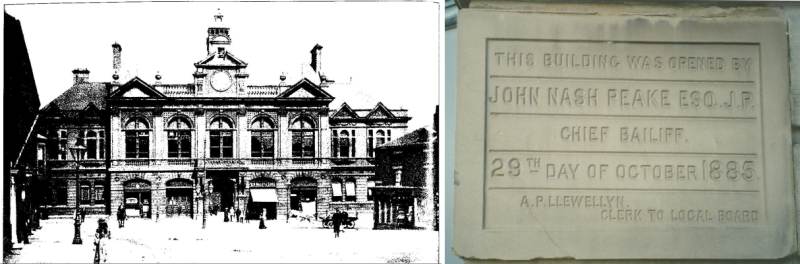
JNP was chairman of the local Liberal Association and was active in all elections from 1857. He was elected to the Tunstall Board of Health in 1863, serving as chief bailiff 1884-5. He became a member of the Tunstall Urban District Council after 1894. He was opposed to the Federation and it was his resolution in Sept 1902 that the Tunstall council decided to have nothing to do with the project. He also served as a Justice of the Peace. In 1885 he opened the new Tunstall Town Hall. A carved stone on the building commemorates the ceremony
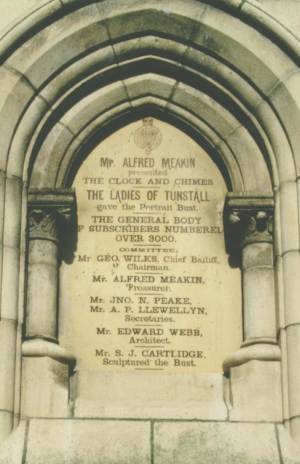
| JNP was an amateur artist, painting mostly portraits and landscapes. He had studied at the Royal Academy under Millais. The RA had accepted one of his paintings in 1859. He painted many portraits of pottery people including Smith Child and William Adams. He must have been an admirer of the philanthropist Smith Child; he was a member of the committee that raised the funds to erect the Tower in his memory in Tunstall Square JNP was a commissioned lieutenant in the 1st Battalion Rifle Volunteers from its inception in 1859. |
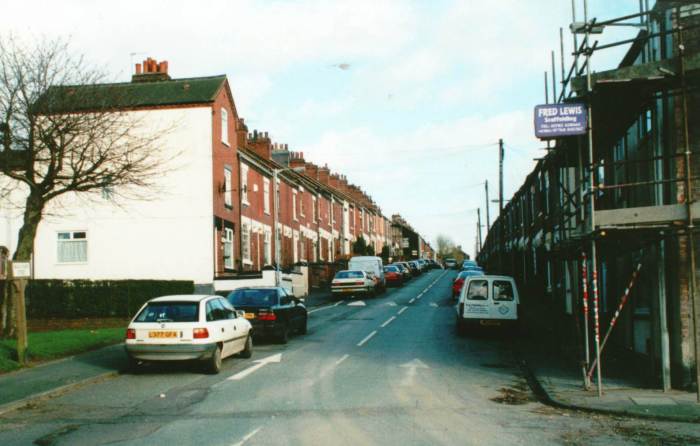
There is also Nash Peake Street which was built in his lifetime The Street still survives.
John Nash Peake married Eleanor Bull, of Bloomfield, they had two children. The 1881 census shows him living with his wife and two servants at Moss Belview, Congleton, Cheshire.
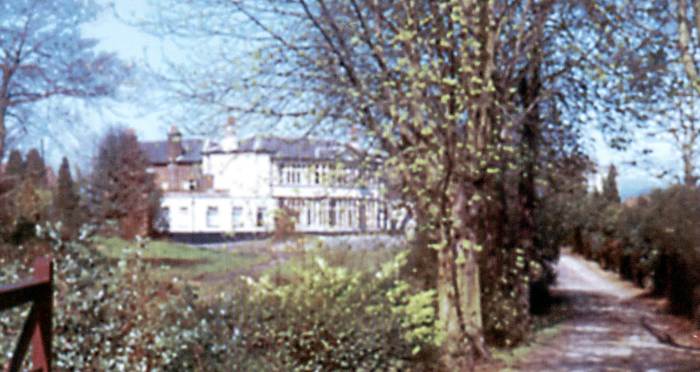
So what about Edward Brannon, in April 1890 he was still living at 16 Audley St and was employed at The Tileries Ironstone Mine as a "Fettler". A "Fettler" was a do anything sort of man, Jack of all Trades, and master of most of them. He was someone who could be trusted, someone you could call on at any time, to do a good job. On Saturday the 19th of April Edward left home at about 1 o’clock to walk the short distance to the mine, there he was to meet up with Robert Mitchell, a "Joiner and Wheelwright", they were to repair a pump at an inset in number 1 shaft. At 7-30 that night whatever small light there may have been in the life of the Brannon family was extinguished. Edward fell 200yds to death.
The first report of the incident appeared in The Evening Sentinel of Monday the 21st April 1890, on page 3 Column 5 under TUNSTALL
"Terrible fatal accident on Saturday night, a terrible accident in it’s nature and fatal in it’s consequence befell Edward Brannon aged 48 who lived in Audley Street, and was employed as a Fettler at Messrs Peake’s Ironstone Mine at Tunstall Bridge. The unfortunate man, was at about half past seven pm intending to get into the cage for the purpose of being lowered into the pit, accidentally missed his footing and was precipitated to the bottom of the shaft. Death resulting immediately a inquest will be held in due course (the spelling of this man’s name has proved to be a little difficult for the Victorians’.
In this article it was spelt "Brannah" at the inquest "Brannan" the death certificate it was spelt "Brennan" whilst the census gives his name as Brannon). The Coroners Court was convened within three days of the accident.
The jury was drawn from the great and the good of Tunstall, and would therefore be unrepresentative. As the death was both sudden and violent, the court would have to decide,
- a) The cause of death.
- b) Where applicable, apportion blame.
- c) Make recommendations to prevent a recurrence.
- d) Sign the death Certificate and release the remains for burial
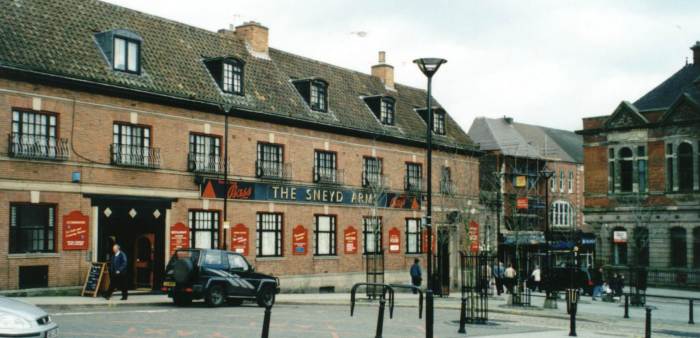
The inquest was held at The Sneyd Arms hotel on the 22nd April 1890.
The Evening Sentinel of that date gives the only remaining account of the Coroners Court. Among the main players mentioned were, the Coroner Mr J Booth, Mr W N Atkinson, H M I Inspector, of mines. Representing the Peake family, Mr W Darnford Solicitor, (Messrs Llewellyn & Ackrill), and the Colliery Manager, Mr Charles Neal. The main witness was Mr R Mitchell. As far as I can tell no one represented Brannon.
"This morning at The Sneyd Arms Hotel Tunstall, Mr John Booth coroner for North Staffordshire, held an inquest relative to the death of Edward Brannan, aged 48, mine fettler of Audley Street, who fell down the shaft at Messrs. Peake’s Tileries Colliery, Tunstall Bridge on Saturday night, and was killed. - Mr W.N.Atkinson, Government Inspector, was present at the inquiry, and Mr W Darnford (Messrs Llewellyn and Ackrill) attended on behalf of the trustees of this colliery. The first witness was Robert Mitchell, joiner and wheelwright Goldenhill, who said he was attending to the pump at Messrs Peake’s number 1 pit on Saturday night. Brannan was assisting him. Witness had been down in the morning to see what was required in the way of repairs. Both were down in the afternoon, and came up at 5.00pm for tea. He went down again at 5.30pm. The pump they were attending to was about 50 yards from the top, and the shaft in all was about 240 yards deep. There was a landing in order to reach the pump. Whilst they were working at the pump the cage was not waiting for them, but was being used for drawing water. Witness gave the signal to go on drawing water when they had got onto the landing. Brannan knew that the water was being drawn out. Witness went to the top two or three times before the accident happened. About 7.15pm he went up to turn the steam on, and on coming down in order to set the pump going, gave the signal to continue drawing water.
When witness went to start the pump, Brannan stepped in the direction of the cage as though intending to get in and go up. Witness was busy with the pump and suddenly heard a cry of ‘Oh! oh!’ and heard the sound of a body falling. They had each a torch lamp, which gave plenty of light. Brannan was carrying his when he approached the shaft. Witness rang the bell for the cage and after going to the top was lowered to the bottom where he found Brannan quite dead. The work at the pump was not quite finished when Brannan walked away and he should think that he heard witness signal to go on drawing water. Brannan had helped him at similar work before. There was some steam where they worked but not sufficient to prevent Brannan from seeing where he was going.
By Mr Atkinson, the steam came up the pit shaft from the exhaust from the pump at which they were working. The pipe was carried down the shaft about 30 yards. The work had been clear of steam until witness turned it on again after completing the repairs. Brannan did not make any remark when he moved towards the cage. There was no banksman. The bell could be heard distinctly. It rang at the top of the shaft.
By the coroner, he could not understand Brannan going towards the shaft has he would have had to help at the remaining work.
By the jury man: there was nothing that would cause Brannan to use the cage at all. He could not say that Brannah heard the signal but he knew the usual mode of working in such matters. There was no bell that worked into the engine house, - Charles Neal certificated manager of the colliery, said both the men who were doing the repairs were experienced. It was usual to do the work described by Mitchell and to go on with water drawing instead of keeping the cage waiting. Both the engine man and the men at work would be able to hear the bell. - By Mr Atkinson: it was not usual to have a banksman when the men were repairing, it was as if they were in the shaft, but they were in the crut. - Mr Atkinson: that is practically the same thing. -The coroner observed that it would not have prevented the accident. It was only a question of duty. The rules specified that no one was to be allowed down the pit without a banksman. - Witness said he did not think one should be there. There were repairs every night. And he did not think there was a colliery in England that had one under such circumstances. - The coroner said it was nonsense to talk like that.
A few days ago a firm had to pay £170 damages because a man had been crushed against the top and the cage and there was no banksman there at the time.
- By a jury man, the signal bell was some 30 yards from the engine house - Mr Atkinson said he had inspected the pit, and could only account for the accident by thinking that Brannan had either slipped or stepped out thinking the cage was there. - In answer to the foreman (Mr Howson) the coroner said the presence of a banksman could not have prevented the accident. It was only in question of what should be. - The witness Mitchell, recalled, said he and Brannan had each a pint of beer at 5.00pm. That was all they had that day. - Mr Atkinson characterised it a very bad practice that anyone working in a shaft should either take beer or spirits. - The coroner in the course of his summing up, expressed the opinion that the affair was an accident. - The jury considered their verdict in private, speedily coming to the conclusion that the occurrence was purely accidental. A verdict to that affect was accordingly entered.
Although I accept that Brannon’s death was an accident, accounts of the incident would stand a second look. It is suggested that Brannon and Mitchell were deployed to repair a pump, which was situated in the up-cast shaft 50yds from the surface. The shaft itself was 240yds deep. At the same time water was to be drawn up this shaft. The only other person mentioned in this report, was the unnamed Engine Driver. It begs the question who was supervising the loading of water at the pit bottom, and the unloading the water on the surface?
Surely if there were others present at the pit they would have been present at the Court as witnesses. When Brannon fell, Mitchell sent for the cage and went first to the surface before riding to the pit bottom to recover the body. Which again suggests they were the only ones at the colliery.
Why did Mitchell go up the pit to turn on the steam? It would surely have been better to send Brannon to do that, while he, Mitchell the Craftsman stayed with the pump.
If there were others at the pit Mitchell could have arranged with them a signal to turn the steam on or off to save him going to the surface.
The only means of communicating between the inset and the Engine House was a bell. This bell was situated 50yds from where the men were working, and 30yds from the Engine House, hardly a safe working situation.
There is no mention in the report of the inset being fenced off from the shaft. This would have had at least prevented someone falling down the shaft by accident.
I suspect the real truth of this accident has been hidden. It is more likely that these two men were not only repairing the pump, but also drawing the water. The scenario goes something like this, while Mitchell was doing the repairs. Brannon was drawing water. The methods for Water drawing are many and varied, however they all involve a container being lowered into the sump. The container is then filled with water either by gravity, or manually with buckets. Because the filling would have to be supervised I suggest that Brannon would have ridden either in the cage with the container or more likely on top of the cage, he would then have been lowered into the pit bottom. At this point he would have stepped off the cage and signalled the Engine Man to lower the cage into the sump so the container could be filled. Once the container is full, Brannon would signal the surface climb back onto the cage and ride up the pit. When he arrived at the pit top the Engine Man would slow the cage allowing Brannon to step off the cage. The cage would then rise to the appropriate level for the container to be emptied. As the pump was being repaired there were times when Mitchell would have wanted some assistance from Brannon but for the rest of the time Brannon would have been fully employed on drawing water.
When it was time to test the pump, Brannon would have come to the inset while Mitchell went to the surface to turn on the steam. When Brannon heard the steam pressure rise he would have started the pump. He could have then signalled to Mitchell if there was a problem, and the steam could have been turned off.
Now imagine the picture, the inset was very small the working pump has started it would be thumping and hissing, steam would be issuing from around the pump and rising from the exhaust some 30yds down the shaft.
When Mitchell came into the inset he signalled the cage back to the surface, then went to the pump. He did not tell Brannon the cage had gone, neither did Brannon ask, but what is certain is that Brannon expected the cage to be there, why else would he step out and fall to his death.
Mr Atkinson H M I in his Annual report for the Home Office written some eight months later wrote, "Two workmen were engaged in repairing a pump in the inset. One of them (Mitchell) went to the surface to turn the steam on, then returned to the pump and rapped the cage away. Soon after the other man (Brannon) went towards the shaft, and fell down. It was supposed that he thought the cage top was opposite the landing of the inset. He had a light, but steam in the shaft would prevent him from seeing clearly".
I think this establishes that Brannon was riding on top of the cage. There could be many reasons for this but the favourite is he was involved in drawing water without the assistance of a banksman.
In the days between the accident and the inquest Mitchell would have at to consider very carefully the position he would take at the inquest. If he tells the truth he implicates himself. He would lose his job, and then have to leave the area for no one else would dare employ him. Or he could lie. What would any of us do in these circumstances? After all who could argue, as he was the only witness.
On Wednesday 23rd April 1890 Edward was taken to St Mary’s Catholic Church in Sun St (now St Aidens St) where surrounded by his family and friends he would have been bid a fond farewell.
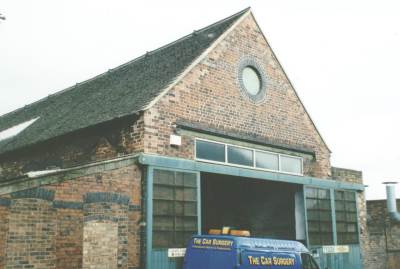
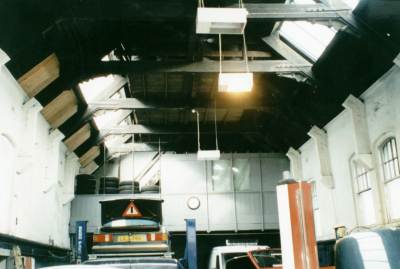
Following the service his coffin was taken the short distance to Tunstall Cemetery
Meanwhile John Nash Peake was doing very well, his businesses were expanding, the artwork was improving, his political ambitions were coming to fruition, and his social life was full. He would be seen around Tunstall dispensing Justice as a Magistrate, or in the Council chamber telling members why they should not support Federation with the other towns; he even found time to take an interest in local sports, the Nash Peake Shield being presented to the best swimmers.
In 1904 he commissioned the construction and building of the main gates to Tunstall Park. The gate (pic) comprises of a wide central gate and a smaller gate to either side. Over the middle gate is the inscription "IN MEMORY OF THOMAS PEAKE BY HIS CHILDREN AD 1904" this of course was John Nash Peake’s father.
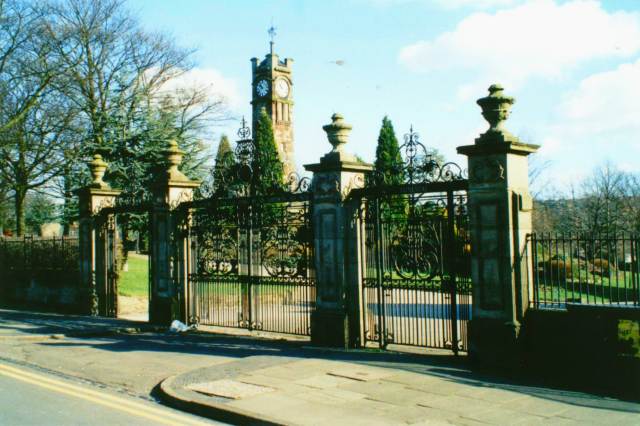
A year later on the 29th of April 1905 John Nash Peak was dead, 15yrs and 10days after Edward Brannon. The report of Peake’s death filled many columns in both The Sentinel and the Congleton Chronicle, and over the days before the funeral there were many more were added as local dignitaries queued up to sing his praises.
On the day of his burial, the 2.11 p.m train from Chatterley Station was to have a Saloon added to the back to carry his coffin to Congleton. The Sentinel requested that all ex-bailiffs should attend the funeral, and send a wreath with this message "from members of the Tunstall Urban District Council in affectionate memory of their old friend and comrade John Nash Peake and with sincere sympathy for his family in their bereavement".
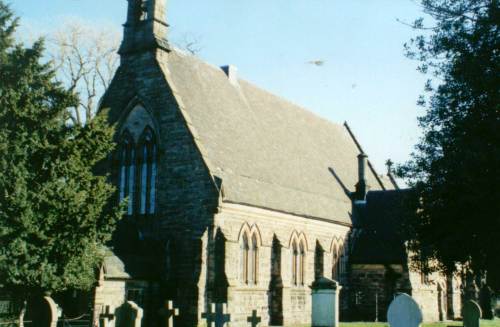 |
From Congleton station the coffin was taken to The Holy Trinity Church in Mossley
The church was full with many more outside. He was buried on the south side of the church. The inscription on his stone cross reads "In loving memory of John Nash Peake of Belle Vue House Congleton Born 3rd April 1837, Died 29th April 1905". |
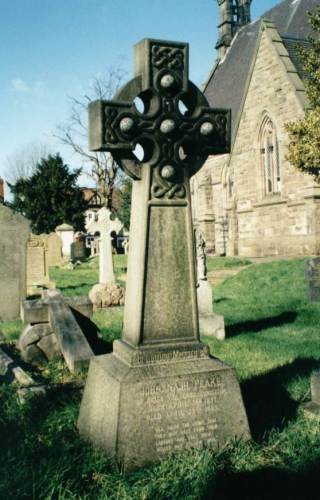 |
"yea saith the spirit, that they may rest from their labours and that their works may follow them."
In his will John Nash Peake left £500, the interest of which was to be distributed among the poor of Tunstall. |
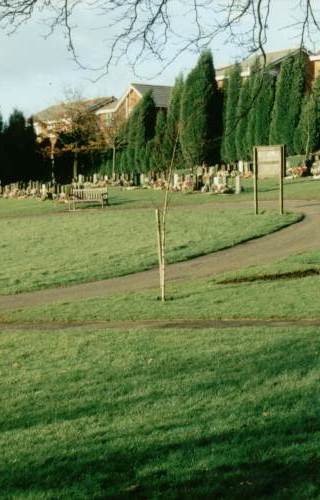 |
I discussed with Father Paul at the Tunstall Catholic Church, the funeral of Edward Brannon, he explained that at the time of Edwards death many people were joining Burial Clubs, where for a small weekly contribution the cost of any funeral would be met, he was also convinced that if the family were in difficulties the Church and its membership would have gathered around and given them both spiritual, and financial assistance. Edwards’s remains were interred in the section of Tunstall cemetery E-30; this area has recently been landscaped. However, a rough measure indicates his remains are somewhere near the young sapling, planted in the picture.
There never was a headstone. |
As for Audley St, a steady but continuous decline in its condition resulted in a number of the houses falling into disrepair. An appeal on Radio Stoke brought some information from Mrs Amy Tomkinson of Bradley now in her eighties, and her brother Cyril Durber, they told me that in the 1920’s they lived at No 25, their house and the house next door were the only two in the street that had a cellar, they were told it was once a Beerhouse. There was also a family called Tillstone who run a small Bus Company this family must have been direct descendants of the Tillstones who lived at No 40 in 1881. Mr Arthur Woodcock lived in No 14 from 1928 to 1940 when in joined the R A F, this was of great interest as it was right next door to where Edward Brannon lived and of the same construction. He was able to confirm that looking from Roylance St the even numbers were on the right hand side. The house had three bedrooms, with two rooms downstairs; the toilet was in the yard. He further explained that people were being moved out of the street to the new council estate at Stanfields.
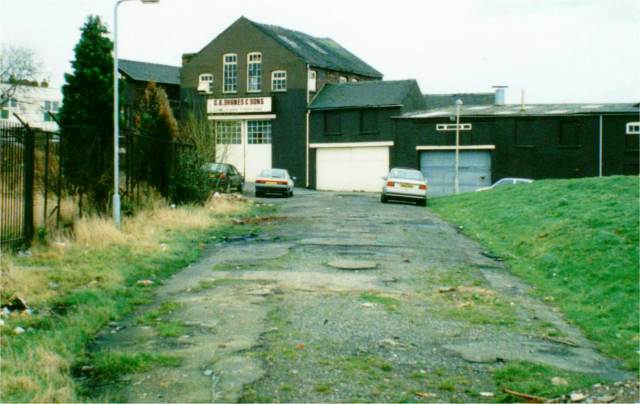
The remaining houses were finally demolished under a Clearance Order for the Watergate Area of Tunstall in 1944. Among those to whom The Local Authority paid compensation were the owners of Numbers 22,24,34,36,38,40,35,37,39,41 and 1A. They were all members of the Nash Peake family.
The 1901 census makes no mention of the Brannon family, living in Audley Street. I would like to think that their relatives still live in the Area, and that one day they will get to know a little more about that last day in Edwards’s life.
The Tileries Ironstone Mine closed on the 28th August 1891
ACKNOWLEDGEMENTS
The Staff at Hanley Library.
Stoke on Trent Land Ownership Records Dept (Mr Ian Lowe).
The listeners to Radio Stoke.
Father Paul Tunstall Catholic Church.
The Staff at Milton Crematorium.
Mr A Williams of Congleton Historical Society.
Mr Robert Burden.
Mr Ian Bailey Course Tutor.
My fellow course members for their support.
Back to Stories
Names Menu
Main Index